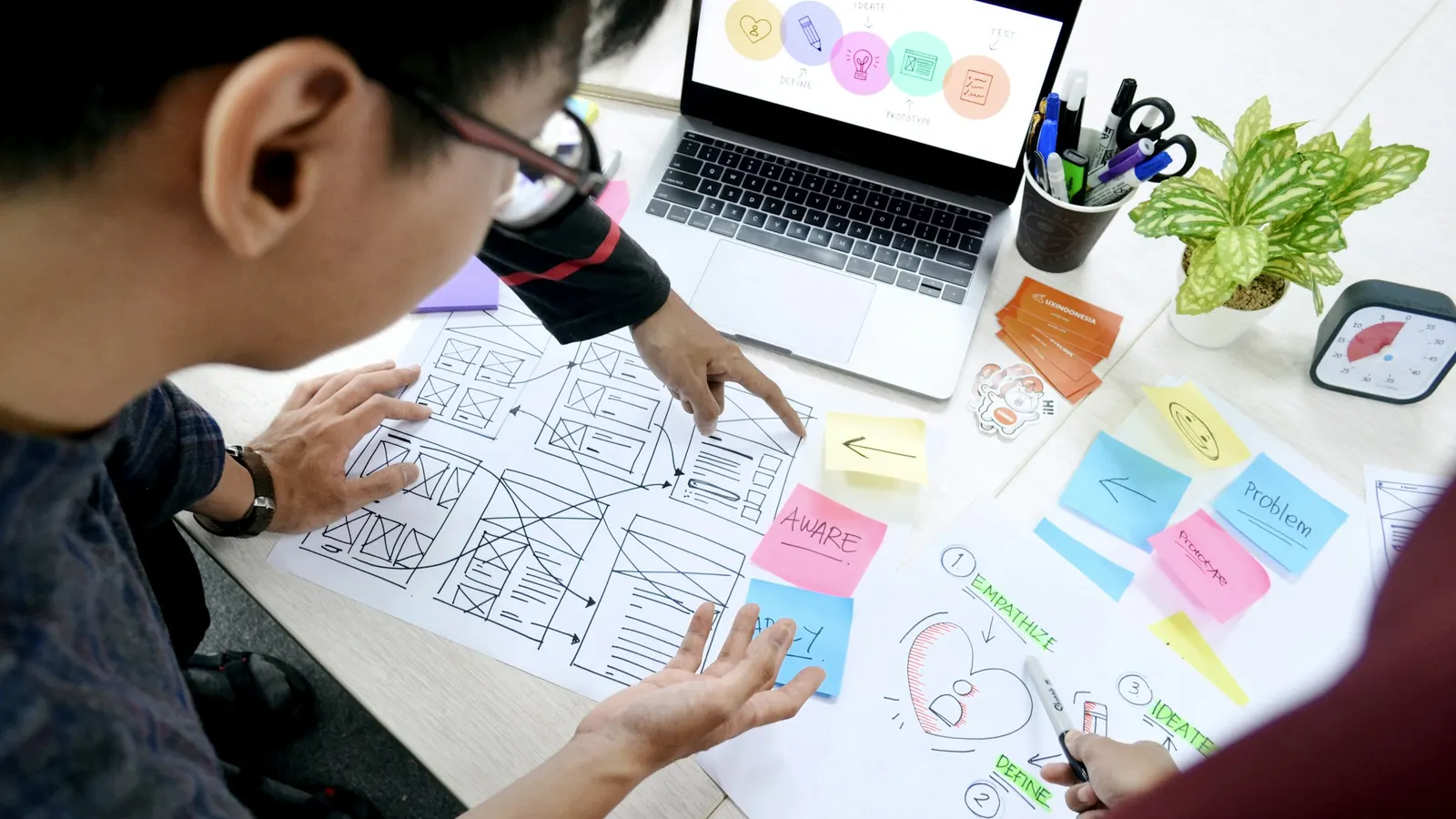
Wireframes and prototypes are the fastest, cheapest way to test ideas — and the most underused practice in web development. Here's how to do them right.
Building without wireframes is like constructing a building without blueprints. You might complete the structure, but the first time you need to make a change, you're tearing down walls. Wireframing and prototyping are the practices that save our UI UX design agency Noida clients from expensive rework by catching structural problems before any code is written.
Low-Fidelity Wireframes: Quantity Over Quality
The first wireframes should be rough — hand-drawn sketches or simple Figma grey boxes. The goal is to generate multiple structural approaches quickly and choose the most promising before investing in visual detail. We produce 3–5 layout alternatives for every key page at this stage, getting client feedback on structure and flow without triggering premature discussions about colors or typography.
Clickable Prototypes: Testing Before Building
A Figma prototype with linked interactions simulates the real product closely enough to conduct genuine user testing — without writing a single line of code. Our startup website development process includes at least one round of prototype testing before development begins. The cost: 4–8 hours of design time. The savings: eliminating 2–4 weeks of rework that would otherwise happen post-development.