A construction or interior fit-out website is judged on one asset above all others — the portfolio — and most firms present theirs in a way that actively undersells the work.
A client evaluating an interior fit-out or construction company is trying to answer one question above all others: can this team actually deliver work at this quality, on a project like mine. Everything else on the website — team bios, service descriptions, company history — is secondary evidence. The portfolio is the primary evidence, and it's the section most construction and fit-out websites handle the worst: low-resolution photos taken hastily on a site visit, project pages with no context about scope or scale, and a gallery that mixes residential, commercial, and hospitality work with no way to filter by what a specific visitor actually cares about.
Given how much of the buying decision rests on this one section, it's worth treating it as the core structural priority of the site rather than an afterthought bolted onto a template.
The Portfolio as Structured Data, Not a Photo Dump
The single biggest upgrade available to most construction and fit-out companies is turning the portfolio from an unstructured photo gallery into a properly categorized project database. Each project should be a structured record with:
- Project type (residential, commercial office, retail, hospitality, industrial)
- Scope (full fit-out, renovation, specific trade work, design-and-build)
- Scale (square footage, budget range if the firm is comfortable disclosing it, timeline)
- Location, which matters enormously for a locally-operating contractor since a prospective client wants to know the firm has done comparable work in their city or region
- Before/after or process documentation, not just a polished final photoshoot — clients evaluating a contractor are often as interested in seeing how a space was transformed as they are in the finished result
Structuring this way means a visitor can filter to "commercial office fit-outs in [city]" or "residential renovations under [budget range]" and see directly comparable past work, rather than scrolling through a mixed gallery hoping to find something relevant. It also means the marketing or ops team can add a new completed project to the site in minutes through a CMS, rather than needing a developer every time — which matters because a stale portfolio (nothing added in a year) quietly signals to visitors that the company might not be as active as competitors.
Photography Quality Is Not Optional
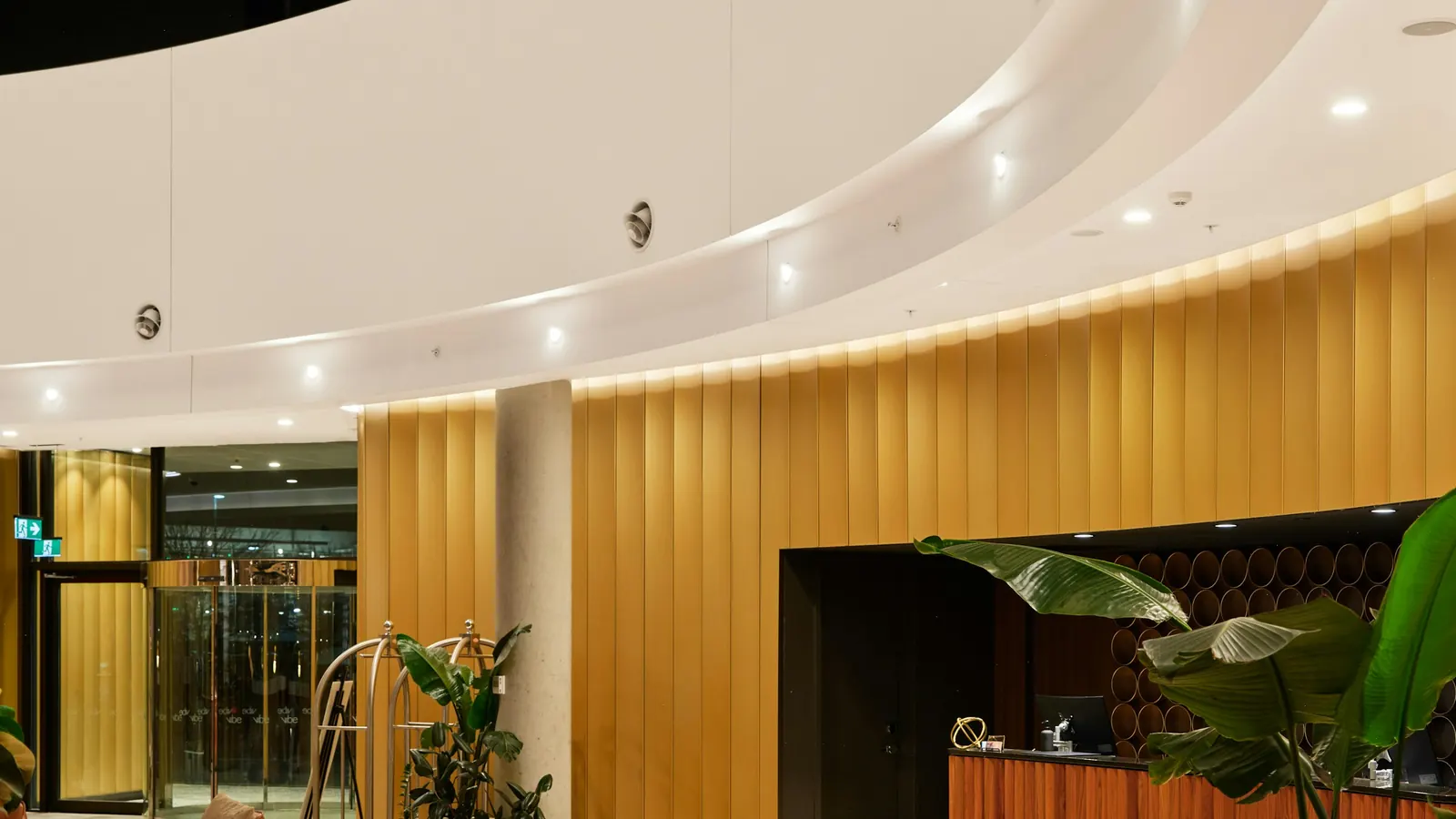
This is a category where visual quality has an outsized, almost unfair effect on perceived competence — a beautifully executed fit-out photographed poorly looks worse on the site than a merely good fit-out photographed professionally, and prospective clients have no way to correct for that when they're evaluating purely through a screen. Investing in professional photography (and short video walkthroughs, where budget allows) for completed projects is one of the highest-return line items in a construction or fit-out company's entire marketing spend, not just its website budget specifically — the website is simply the primary place that investment gets displayed and reused.
Process Transparency Reduces a Real Buyer Fear
Commercial and high-value residential clients hiring a fit-out or construction firm are not just worried about the end result — they're worried about the process: will this run over budget, will it run over schedule, will communication be a mess during the build. A website that addresses this directly, rather than leaving it to a sales call to explain, converts better because it pre-answers the anxiety that's actually driving hesitation.
This typically means a clear, honest explanation of how the firm's process works — initial consultation and site assessment, design/quotation stage, approval and timeline-setting, execution with defined check-in points, handover — presented as a straightforward process page rather than vague marketing language about being "client-focused." It's also where genuinely showing project timelines on portfolio case studies (this office fit-out took 10 weeks from kickoff to handover) does real work, because it gives a prospective client a concrete benchmark against their own expectations rather than an unknown.
Quotation and Enquiry Flow for High-Consideration Purchases
Construction and fit-out projects are high-value, high-consideration purchases — nobody requests a quote impulsively, and the sales cycle typically involves a site visit or detailed consultation before a number can even be discussed. The website's job is not to close the sale (that happens through a human process) but to get a qualified enquiry moving with the right context attached.
An effective enquiry form for this category asks for project type, approximate scope or square footage, target timeline, and budget range (even a rough band, since "unspecified budget" leads are notoriously harder to qualify and close) — this lets the sales or estimation team walk into the first call already understanding roughly what they're dealing with, rather than starting from zero. Attaching reference images or a floor plan upload option to the enquiry form, where feasible, further shortens that first conversation.
Trust Signals Specific to Construction and Fit-Out
Beyond the portfolio itself, a few specific trust elements matter disproportionately in this category:
- Named team and site leadership, not just company branding — clients handing over a physical space for weeks or months want to know who's actually managing the project on-site.
- Vendor and material transparency where relevant — being clear about what brands, materials, or standards the firm typically works with builds confidence for clients who are themselves evaluating quality tiers.
- Genuine safety and compliance information, described accurately and generically (following applicable local building codes and safety standards) without overstating certifications the firm doesn't actually hold.
- Client testimonials tied to specific projects in the portfolio, rather than generic pull-quotes disconnected from any visible work — a testimonial sitting right next to the project it's describing is far more persuasive than the same words on a separate testimonials page.
Local SEO and Multi-City Operations
Construction and fit-out searches are heavily local — "office interior fit-out company in [city]," "residential renovation contractor near me" — and the website's technical structure needs to support this properly. For firms operating in multiple cities, this means dedicated, well-optimized location pages (not one generic page trying to rank everywhere) with location-specific portfolio filtering, contact details, and service area information. This is a common area where a poorly structured site actively loses winnable local search traffic to competitors who've simply set up their location pages correctly.
Mobile and Site-Visit Reality
A meaningful share of traffic to a construction or fit-out site comes from people researching on their phone — sometimes literally standing in the space they're considering renovating, or in a meeting comparing contractors on the spot. A portfolio gallery that's slow to load, hard to browse, or awkward to zoom into on mobile undercuts the exact asset (photography quality) the whole site is built to showcase. Prioritizing fast load times and a genuinely good mobile gallery experience — not just a responsive layout that technically works — protects the return on the photography investment described above.
Handling RFPs and Larger Tender-Based Work
Beyond individual client enquiries, many construction and fit-out firms also compete for larger commercial contracts through formal RFP (request for proposal) or tender processes, often initiated by a developer, corporate client, or government body rather than found through general web search. While the website isn't typically where these opportunities originate, it plays a real supporting role: a dedicated, well-organized section presenting the firm's credentials, past project scale, certifications, and capacity (team size, equipment, typical project value range) gives a procurement or facilities team evaluating the firm a fast, credible reference point during their own internal vetting process, rather than requiring a separate credentials document to be requested and emailed every time. Firms that pursue this kind of work regularly benefit from keeping this section current and specific, since procurement evaluators tend to move quickly through a shortlist and reward whoever makes their diligence easiest.
A Client Portal for Projects in Progress
For firms running longer engagements — a multi-month office fit-out or a residential renovation spanning several weeks — a simple client-facing portal or update system addresses one of the most common sources of client anxiety during a build: not knowing what's happening or when the next milestone lands. This doesn't need to be an elaborate project management platform; even a straightforward, regularly updated project page with photo progress updates, an upcoming milestone list, and a channel for the client to ask questions directly reduces the volume of anxious phone calls and gives the client a sense of visibility and control during a process that can otherwise feel like a black box once the contract is signed. For firms managing several concurrent projects, building this as a proper login-gated portal (rather than an ad hoc WhatsApp thread per project) also creates a searchable record of decisions and change requests that protects both the firm and the client if a dispute arises later about what was agreed.
Video Walkthroughs and Virtual Tours
Static photography, however well shot, still leaves a prospective client guessing about scale, flow, and how spaces actually connect to one another — something a short walkthrough video or a simple 360-degree virtual tour communicates far more effectively, particularly for larger commercial fit-outs where spatial layout is a genuine part of the value being delivered. This doesn't need to be an elaborate production for every project; even a phone-shot walkthrough of a completed space, edited simply and paired with a short voiceover explaining the brief and the approach, adds a dimension that photography alone can't, and it's increasingly what prospective clients expect to see from a firm confident enough in its work to show it in motion rather than only in curated stills. For firms with a strong enough pipeline of completed projects, building a small library of these walkthroughs over time turns the portfolio into something closer to a real showroom experience than a static gallery, which is a meaningful differentiator in a category where most competitors are still relying entirely on photography alone.
Bringing the Pieces Together
For a construction or interior fit-out company, the website's real job is to make outstanding past work easy to browse, easy to filter to what's relevant, and easy to trust as representative of what a prospective client will get — and then to get a well-qualified enquiry moving toward that first real conversation. That's a fundamentally different brief than a generic corporate website template, and it's the one that actually turns browsing into booked consultations.
Scult builds websites for construction and interior fit-out companies — structured, filterable project portfolios, conversion-focused enquiry flows, and local SEO architecture for firms operating across multiple cities. If your best work is buried in an unstructured photo gallery instead of doing the selling it should be doing, reach out at connect@scult.in or WhatsApp +91 70072 88376.