A full rewrite is rarely the right first move for an aging website — here's a practical, risk-managed sequence for modernizing legacy systems without breaking what still works.
The instinct when a website feels old is to rebuild it from scratch. That instinct is usually wrong, and it's the single most expensive mistake in modernization projects. A full rewrite discards everything currently working — the SEO equity built up over years, the edge cases handled through hard-won bug fixes nobody remembers the reason for, the integrations quietly doing their job — and replaces it with a large, high-risk, big-bang launch where every one of those things has to be rediscovered and rebuilt correctly, usually under time pressure, before the new system can go live. A practical modernization roadmap treats the rewrite as the last resort, not the first move, and sequences the actual work so risk stays low and value shows up early.
Start with an honest audit, not an assumption
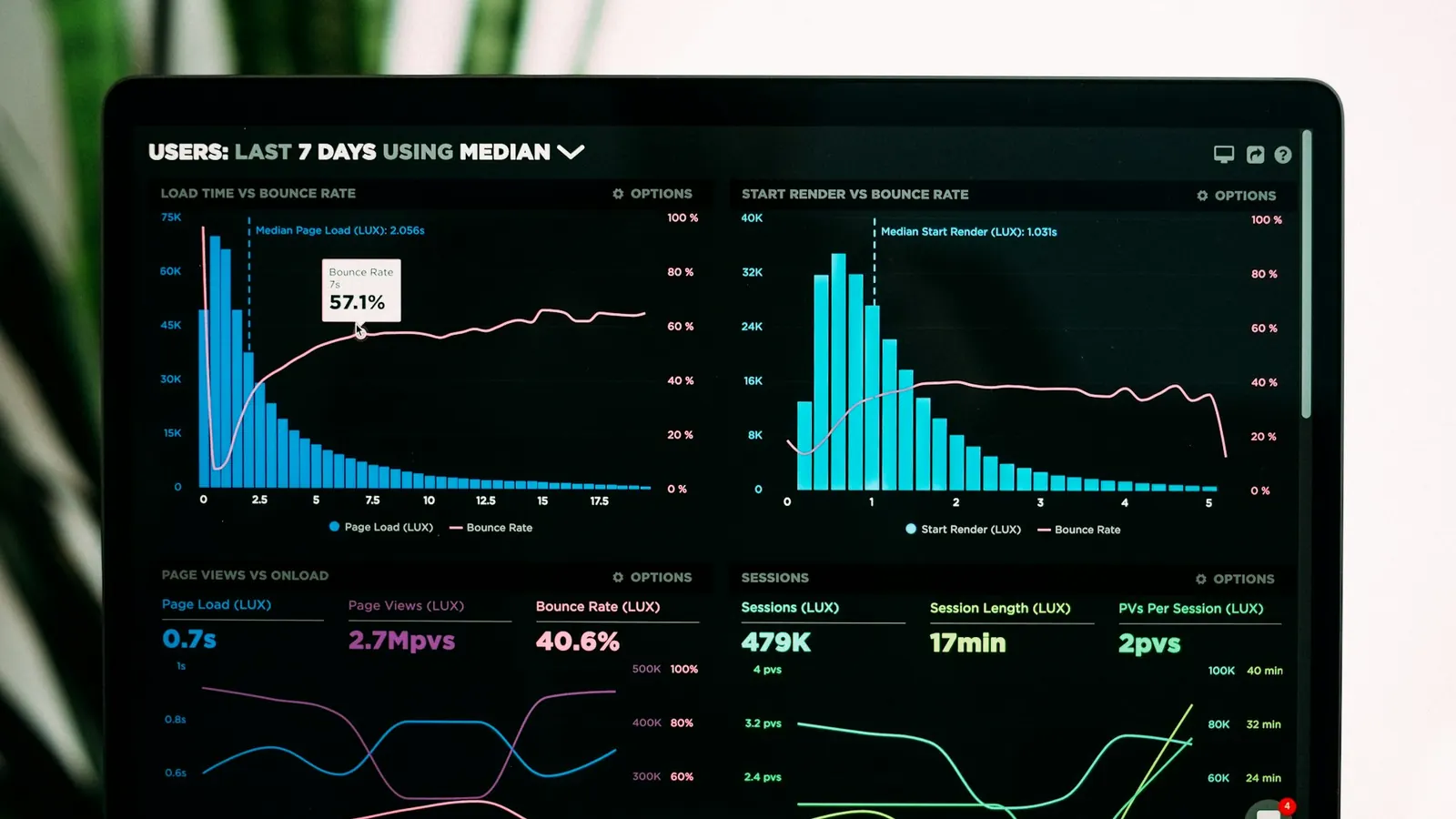
Before any code changes, the first real step is establishing what the current system actually does and how well it's actually doing it — not what anyone assumes based on its age. That means checking real performance data (page load times, Core Web Vitals scores), real traffic and conversion data (which pages actually drive the business, which are barely visited), the state of the underlying technology (how outdated is the framework or CMS version, are there known security vulnerabilities in current dependencies), and the state of the codebase itself (is there any test coverage, is the code organized in a way a new developer could reasonably understand, or is it a single unmaintained file three thousand lines long).
This audit routinely surfaces a different picture than the "the whole thing is old, replace it" assumption that started the conversation. Often, one specific area — an outdated checkout flow, a slow database query, an unsupported plugin — is doing most of the damage, while the rest of the system is functioning acceptably and doesn't need to be touched at all yet. Knowing which is which changes the entire roadmap from "rebuild everything" to "fix the two things actually causing pain."
The strangler fig pattern: replace incrementally, not all at once
The most reliable approach to modernizing a system that's still actively serving real traffic is what's known as the strangler fig pattern — named after the strangler fig vine, which grows around a host tree and gradually replaces it without the tree ever being cut down all at once. Applied to software, it means new functionality is built alongside the old system, traffic is incrementally routed to the new pieces as they're proven to work, and the old system is only decommissioned once nothing depends on it anymore.
Concretely, this might mean routing one specific page or feature — say, the product catalog — through a new, modernized service while everything else continues running on the legacy platform behind a routing layer that decides which requests go where. Once the new catalog is proven stable in production, the next piece migrates the same way, then the next, until eventually nothing routes to the legacy system at all and it can be safely turned off.
The advantage over a big-bang rewrite is that risk is distributed across many small, reversible steps instead of concentrated in one irreversible cutover. If the new product catalog has a bug, it affects one feature, not the entire site, and it can be rolled back to the legacy version instantly while the new version is fixed — a luxury a full rewrite simply doesn't have, because there's no functioning old system left to fall back to once the new one launches.
Prioritizing what to modernize first
Not everything deserves equal urgency, and a sensible roadmap ranks the work by a combination of business impact and technical risk rather than tackling things in whatever order feels most satisfying to fix.
Security vulnerabilities in outdated dependencies come first, always, regardless of how unglamorous that work is — an unpatched, publicly known vulnerability in a CMS plugin or framework version is an active risk sitting on the live site every day it's not addressed, and it shouldn't wait for a broader modernization plan to get around to it.
High-traffic, high-conversion pages come next, because improvements there compound — a faster, better-functioning checkout flow or product page affects revenue directly and immediately, while modernizing a rarely-visited internal page has real but much smaller impact even if the code there is equally outdated.
Anything actively blocking the business comes alongside those two — a CMS so difficult to use that the marketing team can't publish content without developer help, or a system so brittle that every small change risks breaking something unrelated, is a productivity tax being paid every single day, and fixing it has value beyond what shows up in performance metrics.
Everything else — code that's old but stable, quiet, and not causing measurable pain — can genuinely wait, and forcing it into the modernization roadmap purely because it's old is exactly the instinct this whole approach is meant to correct.
The specific decision points that come up
CMS migration deserves particular caution because content migration is almost always underestimated. Moving from one CMS to another means every existing page, its metadata, its URL structure, and its internal linking needs to be preserved or properly redirected — a broken redirect strategy on a CMS migration is one of the most common causes of a sudden, painful drop in search rankings after a "successful" launch, because search engines lose track of pages that quietly moved or disappeared.
Framework and dependency upgrades are usually safer done incrementally — moving one major version at a time with the test suite (or manual regression testing, if no automated suite exists) run at each step — rather than jumping from a framework version several years old directly to the current one in a single leap, which multiplies the number of breaking changes that need to be diagnosed simultaneously.
Database and data model changes are the highest-risk category because they're the hardest to reverse once made — any schema change affecting live data should go through a migration that can run in both directions (forward and rollback) and should be tested against a realistic copy of production data, not a small synthetic sample that doesn't reflect the actual messiness of years of real records.
Feature flags as the connective tissue of an incremental migration
A feature flag — a switch, checked at runtime, that decides whether a request is served by the old code path or the new one — is what makes the strangler fig pattern practically executable rather than just a nice diagram. Instead of a deploy being the moment a change goes live for everyone, the flag decouples "the new code exists in production" from "the new code is actually serving traffic," which means a migrated feature can be turned on for a small percentage of traffic first, watched for errors or unexpected behavior, and either ramped up gradually or instantly turned back off if something looks wrong — all without a redeploy.
This matters especially for the riskiest migrations, where the confidence to fully commit only builds gradually. A payment flow or checkout process migrated to a new system might run behind a flag that starts at 1% of traffic, moves to 10% once a week of clean data confirms it's behaving correctly, then to 50%, then to 100% — with the ability to drop back to 0% instantly at any point in that ramp if a problem surfaces. Compare that to a big-bang cutover of the same flow, where the first sign of trouble is a spike in failed transactions across all traffic simultaneously, with no gradual warning and no partial rollback available.
Communicating the plan to people who aren't in the code
A modernization roadmap that only exists as a technical plan, invisible to the rest of the business, tends to generate friction it doesn't need to. Stakeholders outside engineering — marketing teams who publish content, sales teams who demo the product, support teams fielding user questions — are directly affected by what's changing and when, and a modernization effort that surprises them mid-migration (a CMS interface that suddenly looks different with no warning, a URL structure that changed without support being told how to explain it to a confused customer) creates avoidable internal friction on top of the technical risk already being managed.
A simple, regularly updated summary of what's migrating, roughly when, and what if anything changes for people outside engineering — not a detailed technical changelog, just enough for other teams to not be caught off guard — is a small amount of extra communication work that prevents a disproportionate amount of confusion and pushback once changes start reaching real users.
Testing and rollback: the parts that get skipped under time pressure
Every migration step in a modernization roadmap needs a rollback path defined before it ships, not improvised after something breaks. That might be as simple as a feature flag that reroutes traffic back to the legacy path, or as involved as a database rollback script — but "we'll figure out how to undo this if it goes wrong" is not a rollback plan, and discovering there isn't one during an actual incident is a genuinely bad way to find out.
Regression testing matters more in a modernization project than in most new development, precisely because the legacy system's exact current behavior — including its undocumented quirks and edge cases — is the thing being preserved. A new system that's more "correct" by some abstract standard but breaks a workflow real users or an internal team quietly depended on for years is still a real production incident, even if the new code is objectively better engineered.
When a full rewrite genuinely is the right call
None of this is an argument that rewrites are never justified. When the underlying technology is so obsolete that finding developers to maintain it is itself a business risk, when the architecture fundamentally cannot support a needed direction (a monolith that needs to become services for a business that's genuinely scaling into needing that), or when the incremental cost of continuing to patch and extend the legacy system has clearly exceeded what a rebuild would cost — a full modernization is the right call. The point isn't that rewrites are always wrong; it's that they should be a conclusion reached after an honest audit, not the assumption the project started with.
We approach legacy modernization work for clients the same way regardless of which direction it lands — start with a genuine audit of what's actually broken versus merely old, prioritize by real business impact, and default to incremental, reversible steps unless the audit itself makes the case for a full rebuild. That sequencing is what keeps a modernization project from becoming a bigger, riskier undertaking than the problem it was meant to solve.